




For Toyota, SDVs are first and foremost about safety and security. The company revealed some of the technologies it is developing to bring road accidents down to zero.
At the RAV4 world premiere in May, Chief Branding Officer (CBO) Simon Humphries shared the following story:
CBO Humphries

RAV4 marks the start of our journey in building software-defined vehicles (SDVs*).
*Cars designed and developed with the premise of updating vehicle features via software.
Now I think for many people here, the first thing you think of when I say “software-defined vehicle” is entertainment. And make no mistake...that’s a big part of it.
But when Akio Toyoda was recently asked what the definition of an SDV was, his answer was crystal clear... It’s first and foremost a path to zero traffic accidents.
Many people probably think of SDVs as cars that allow you to enjoy music, videos, and play games online.
And indeed, interest in such features has led SDVs to capture a growing share in certain markets. For Toyota, however, the top priority is safety and security.
While this may be a novel approach, how exactly will shifting to SDVs achieve safety and security? What makes Toyota’s SDVs unique?
On October 20, the company revealed some of the intelligent technologies under development, giving the media a firsthand look at the world Toyota envisions.
Infrastructure coordination and behavior prediction
The ultimate dream for a mobility society is zero traffic accidents. To achieve this goal, Toyota has long advocated for a three-pronged approach that involves not only safer vehicles, but also people—from drivers to pedestrians—and the transport environment, such as signals, roads, and other infrastructure.

“The pillars of a three-pronged approach are behavior prediction, and technologies for coordinating with infrastructure,” points out Akihiro Sarada, president of the Software Development Center.

To put it another way, the idea is to have artificial intelligence (AI) analyze information obtained from both cars and infrastructure and use this to predict and avoid dangers.
Seeing ahead by coordinating with infrastructure
For instance, picture yourself at an intersection, trying to time your right-hand turn through a constant stream of oncoming traffic.
Spotting a gap in the flow of cars, you quickly round the corner, only to find a pedestrian on the crosswalk right in front of you. No doubt many readers have had similar close calls.
At the media briefing, Toyota showed how such situations could be handled through coordination between infrastructure and vehicles.
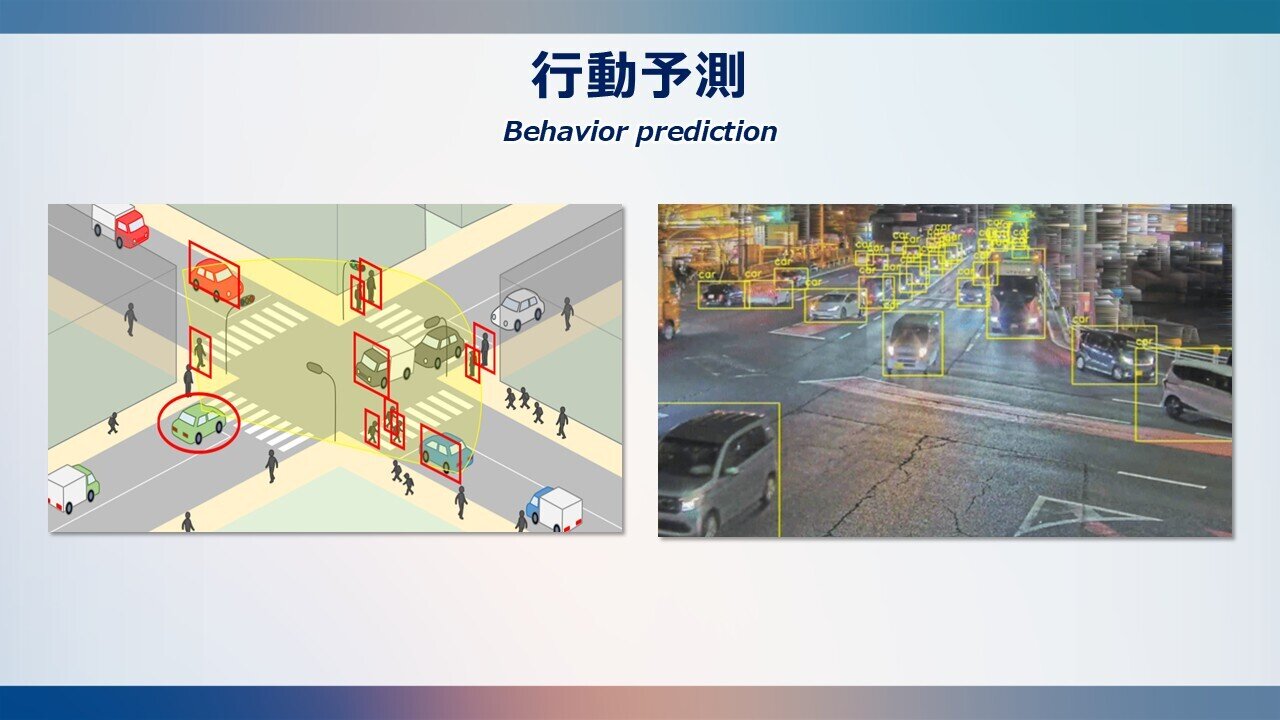
As the driver looks to make the turn, an autonomous driving-support AI agent chimes in: “Aside from oncoming traffic, you also need to be careful of the crosswalk.”
The alert is provided because a camera installed at the intersection detects a pedestrian in the driver’s blind spot.
If the reminder arrives with enough time to mentally register and respond, the driver can visually identify the pedestrian and approach the crosswalk at a safe speed.

The event also featured test drives where participants could experience how vehicles might respond if a child suddenly darted out from behind a building, chasing a ball onto the road.
Even vehicles equipped with the latest automatic braking systems can struggle to respond to objects that suddenly emerge from a blind spot. Fortunately, such blind spots can be offset by cameras mounted on oncoming vehicles or traffic lights.
When a hazard is detected, the AI agent alerts the driver well in advance of the potential danger. If the car is deemed to be traveling too fast, it applies the brakes to be ready in case the child darts out.
This scenario perfectly illustrates how even accidents that seem unavoidable from the perspective of an individual car can be prevented through a three-pronged approach.
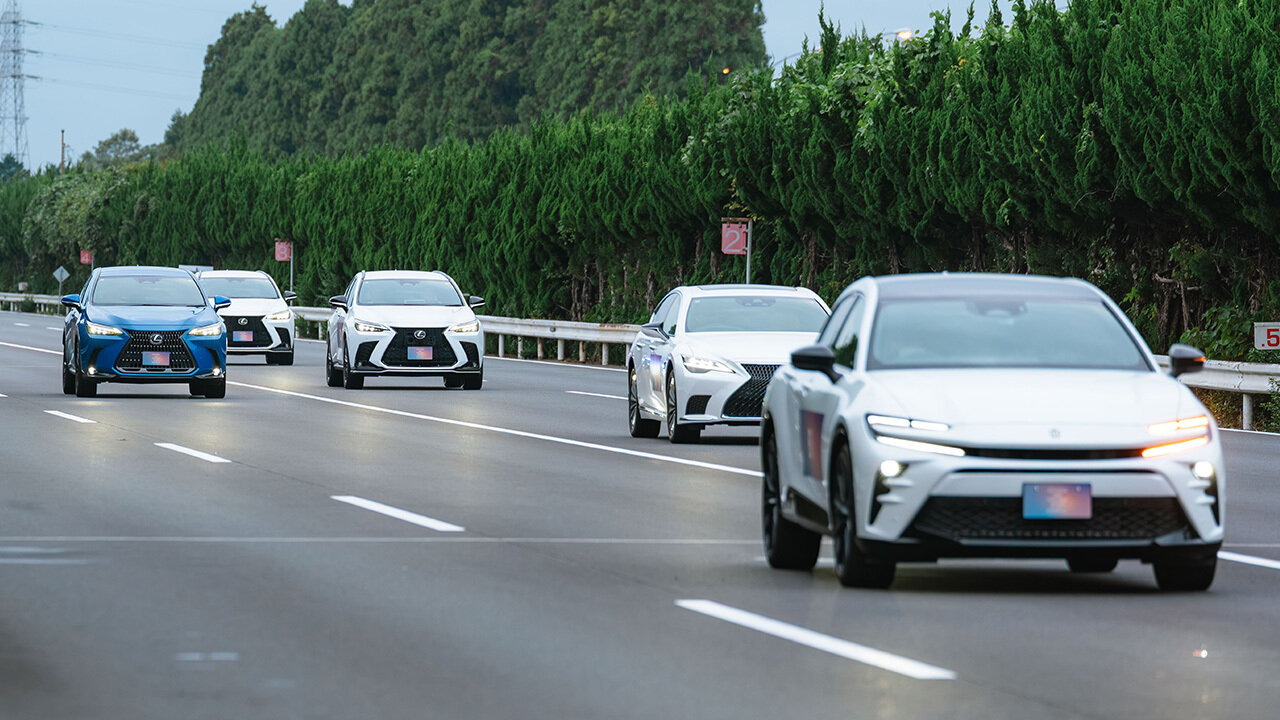
In a separate demonstration, a traffic control system was used to ensure smooth lane merging on a highway.

Take the case above, where a car merges into the driving lane from the left. As they try to move into the right lane, another vehicle is coming up close behind.
In such situations, the control system can instantly calculate what each vehicle should do and instruct them accordingly.
Before reaching the merging point, the AI agent suggests that the driver should leave some space for a merging vehicle. When they do so, it responds with, “Thank you for sharing the road.”
