





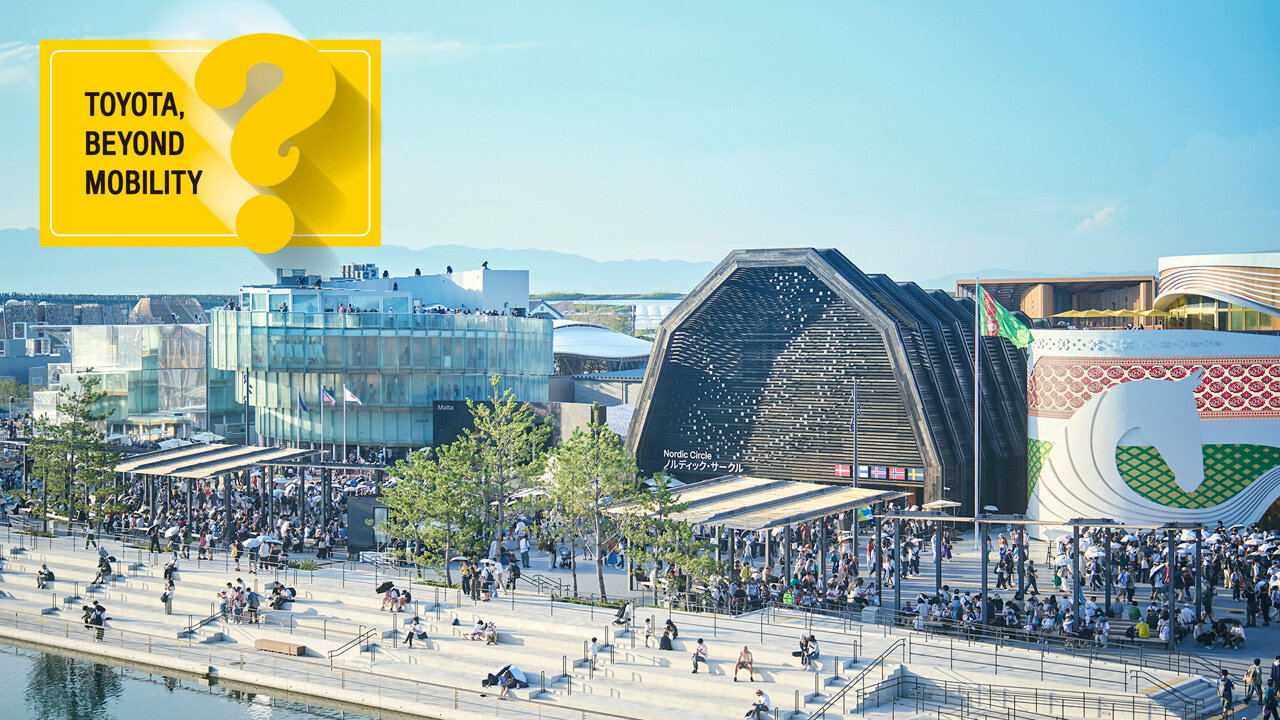
A series showcasing Toyota's activities in non-automotive fields. Who is ready for a Toyota sauna?
Expo 2025 recently wrapped up in Osaka.
In this article, we’re want to shineshining the spotlight on a special exhibit hosted in a small room at the Nordic Pavilion, Nordic Circle, unknown to all but the most dedicated Expo enthusiasts.
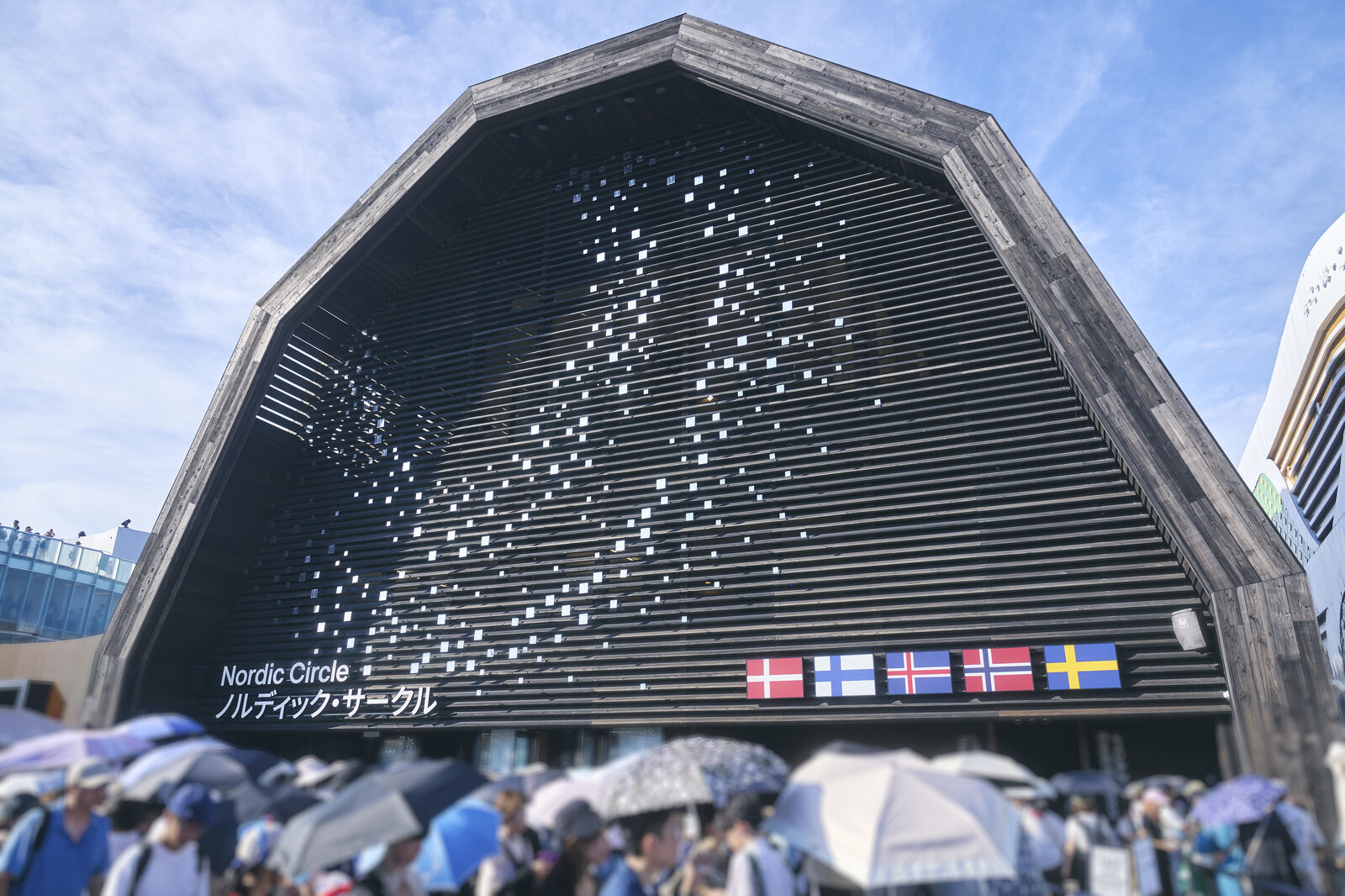
So, what was inside? The answer: the world’s first “hydrogen sauna” powered by hydrogen combustion technology. It looks something like this:

Despite the potential to revolutionize saunas, this innovation remains largely unknown. Curious visitors to the pavilion were shown images of the sauna room and asked to guess what it might be.

“What is that, a house?” was one girl’s honest response. When we suggested that it had something to do with hydrogen, she looked puzzled. “Hydrogen? I don’t have a clue (laughs).”
Sorry to for interrupting a your fun Expo day with such a tricky complicated questions!

One man who attended the Expo more than 50 times told us, “I had no idea this was here! Hydrogen saunas seem like they’d be good for the environment. But why is Toyota doing it?”
Thank you—that was exactly the comment we were hoping for!
Why only one day?
To begin with, why did this exhibit fly so low under the radar? The reason is that it was only open to the public on September 9, Jyväskylä Day at the Nordic Pavilion.

For some Toyota Times readers, the name Jyväskylä might ring a bell. “You mean that Jyväskylä?” we hear you asking.
That’s right! Jyväskylä, the Finnish city that is home to the TOYOTA GAZOO Racing World Rally Team (TGR-WRT).
It is a university city, surrounded by forests and lakes, but for the big day, a large group of officials made the journey to Japan. This is because Toyota is developing the hydrogen sauna jointly with Harvia, Finland’s world-renowned sauna manufacturer.
However, despite coming from the home of the sauna, these Finnish visitors were not prepared for the shock of a Japanese summer.
Japanese summer: a natural sauna

Finland is a place where winter temperatures frequently fall below freezing. Compared to that, Osaka on a 35-degree-plus midsummer day was... “Really hot. Just standing here feels, I feel like beingI’m in a natural sauna,” remarked one visitor with a laugh, sweating heavily.
Others asked whether they could take a plunge in Osaka Bay, out in front of the pavilion.
One of the people who led the hydrogen sauna’s joint development with these good-humored Finns is Masashi Nakamura.
Masashi Nakamura, Project Manager, Hydrogen Factory, Toyota Motor Corporation

Given all the support the Finnish people give us in rally, we wanted to develop something that would benefit them using Toyota’s hydrogen technology. We set out to spread happiness through the saunas that Finns love so dearly.

One feature of hydrogen is that it produces neither carbon dioxide (CO2) nor carbon monoxide (CO), which has the advantage of heating up a sauna room more quickly.
Why does a hydrogen sauna heat up more quickly?
Project Manager Nakamura
In a traditional wood-fired sauna, burning the wood emits carbon monoxide, which is released through a chimney. When you do that, some of the heated air also escapes.
The combustion in hydrogen saunas doesn’t produce carbon monoxide, so you don’t need a chimney. Heat doesn’t escape from the room. That means it can warm up efficiently in no time at all, without using a lot of energy.
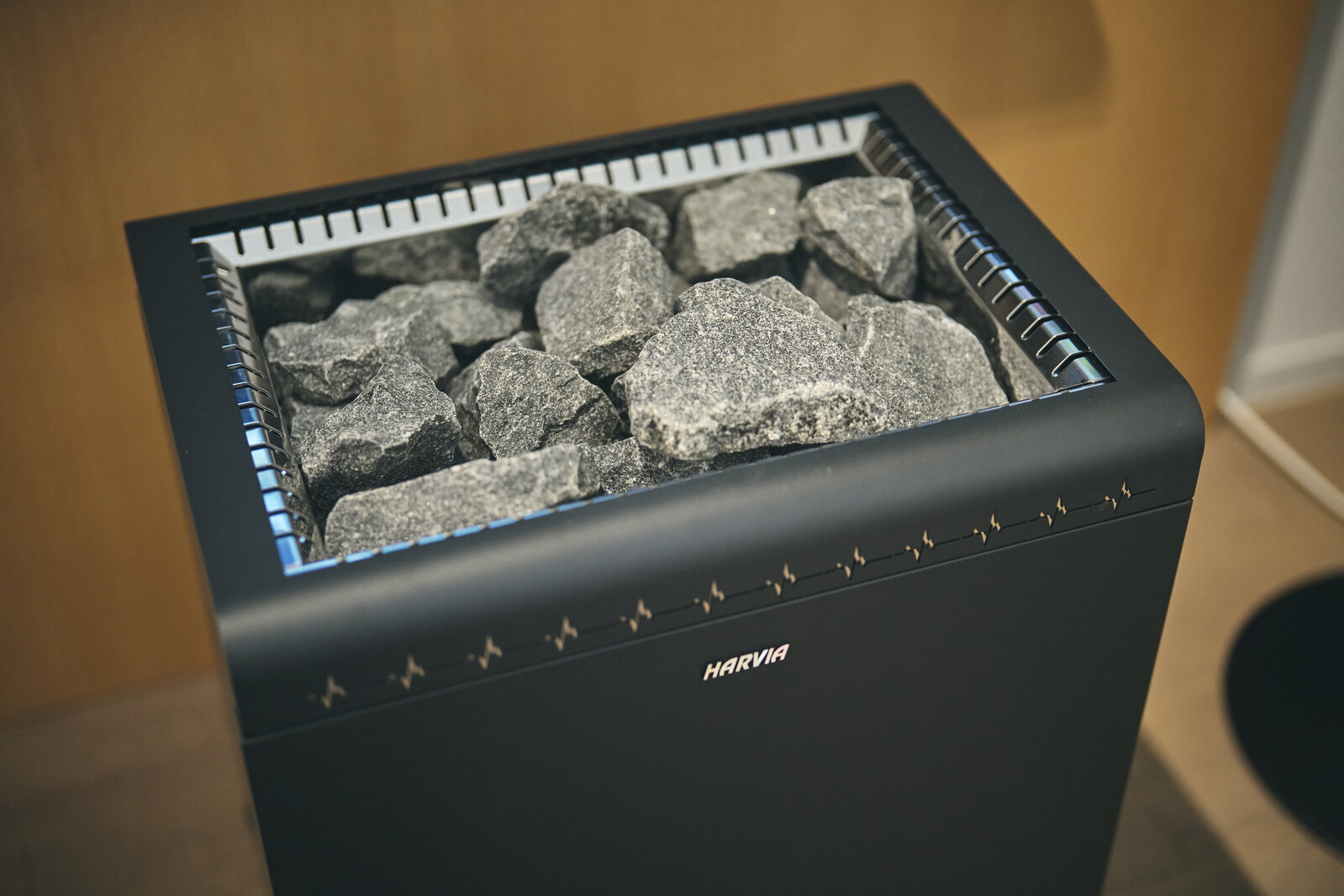
As seen in the photo above, the hydrogen flames and warm air pass between the sauna stones. Heating evenly from all directions, the warmth gently envelops as it spreads.
This is also used to create “löyly,” the pleasant steam that forms when water is thrown onto the stones. The essence of a traditional smoke sauna is its gentle, cozy heat, and that is what Toyota hopes to replicate.
But how do people in Finland — the home of sauna — see it?