




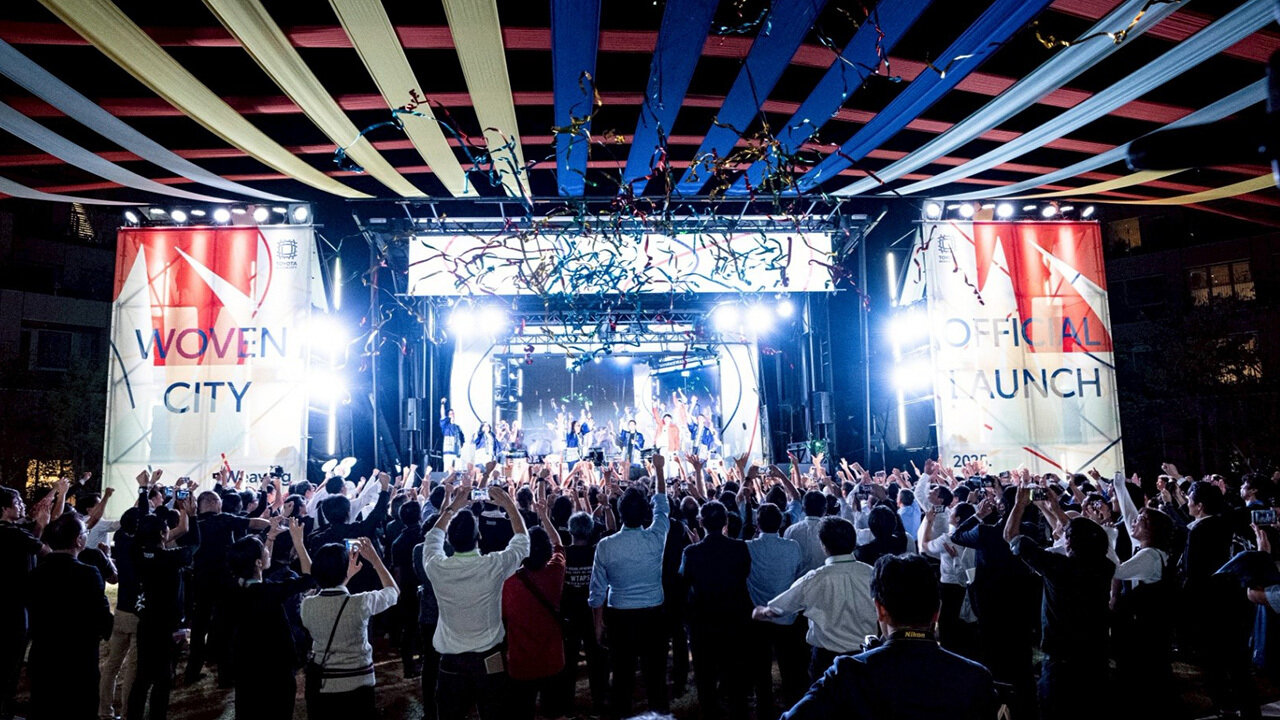
Woven City has officially launched. With preparations finally complete, Toyota's city-sized test course is ready to pursue its mission of "well-being for all."
[Media Q&A] The WbyT tugboat
On the day, a Q&A session was also held for various media outlets, touching on the roles of Woven City and WbyT. The questions were fielded by three WbyT members: SVP Toyoda, CEO Hajime Kumabe, and CFO Kenta Kon. We share some of their responses below.
――What kind of outcomes do you want kakezan to deliver, and when?
SVP Toyoda
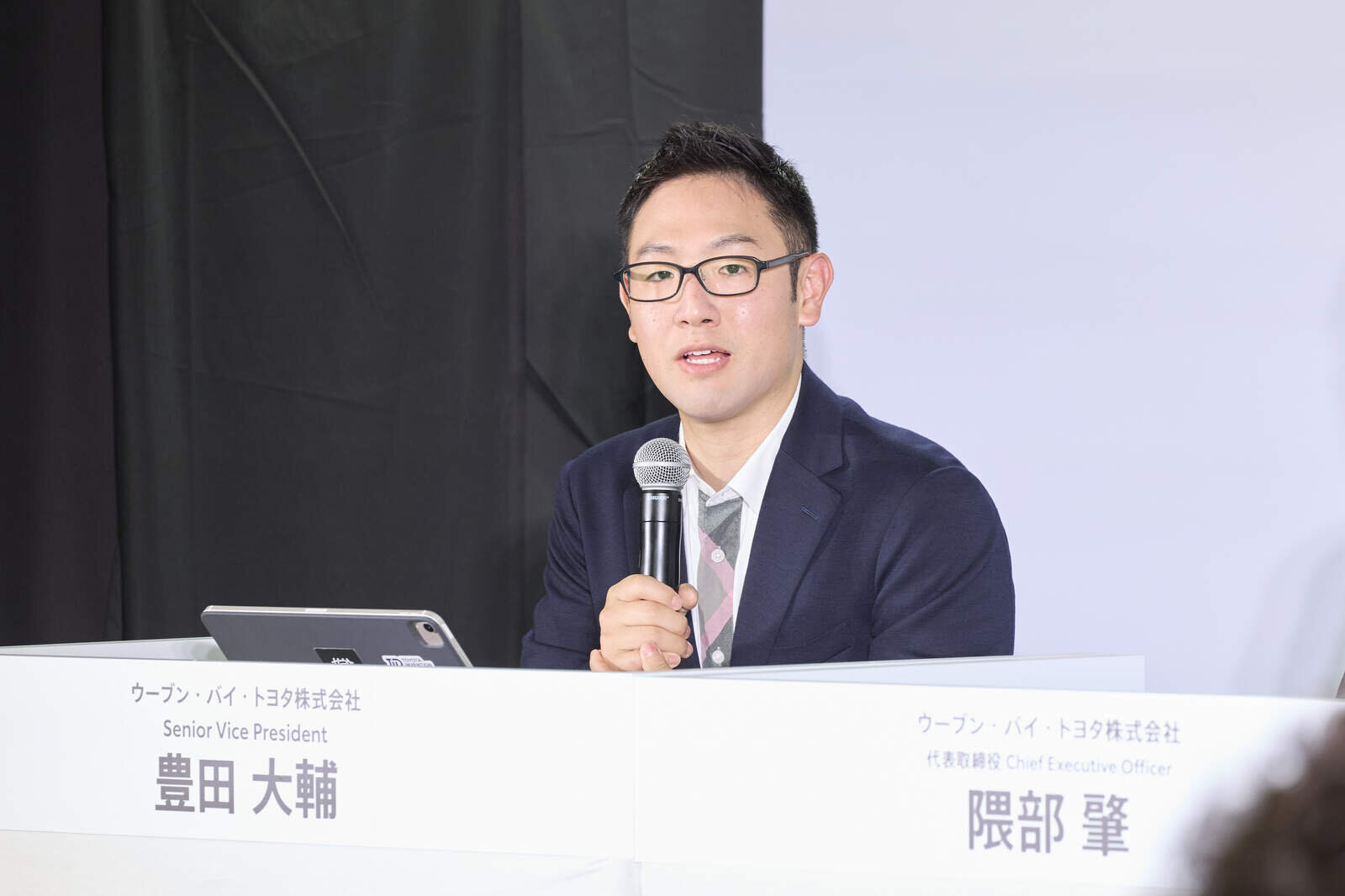
To be honest, we don’t know when results will emerge. There may even be outcomes or outputs that we do not foresee, or perhaps none. I think the process will provide many lessons.
Instead of success or failure, I think one of our initial measures of achievement will be whether we are able to pursue many different initiatives.
The more we try, the more lessons we learn. These will dictate whether we move forward, adjust our course, or take a step back.
Rather than staying at a standstill, I think the most important aspect of this first phase is to constantly have points of change and keep moving.
I don’t know if you would call that an outcome, but that is our mindset.
――You mentioned the importance of Weaver feedback, but how will their reactions be incorporated?
SVP Toyoda
I think the question of how things are evaluated is extremely important.
I am also involved in car development as a test driver, and while the quality of feedback is important, I think what’s equally crucial is how much you lower the barriers and make it easy to provide feedback.
Simply noting whether you like or dislike something is important as a first step, and whether you use something or not is itself valuable feedback.
Another key aspect of Woven City is lowering the barriers for testing whatever improvements are made based on the feedback received.
――(Following the description of Woven City as a tugboat leading Toyota’s transformation into a mobility company) I thought WbyT might serve as a reset for Toyota, starting from the ground as a venture company. In that case, you can also leverage Toyota’s vast resources and extensive connections. A venture that can act like a major company. That seems like a very competitive position. Does this view hit the mark? Are you really taking this approach?
CEO Kumabe
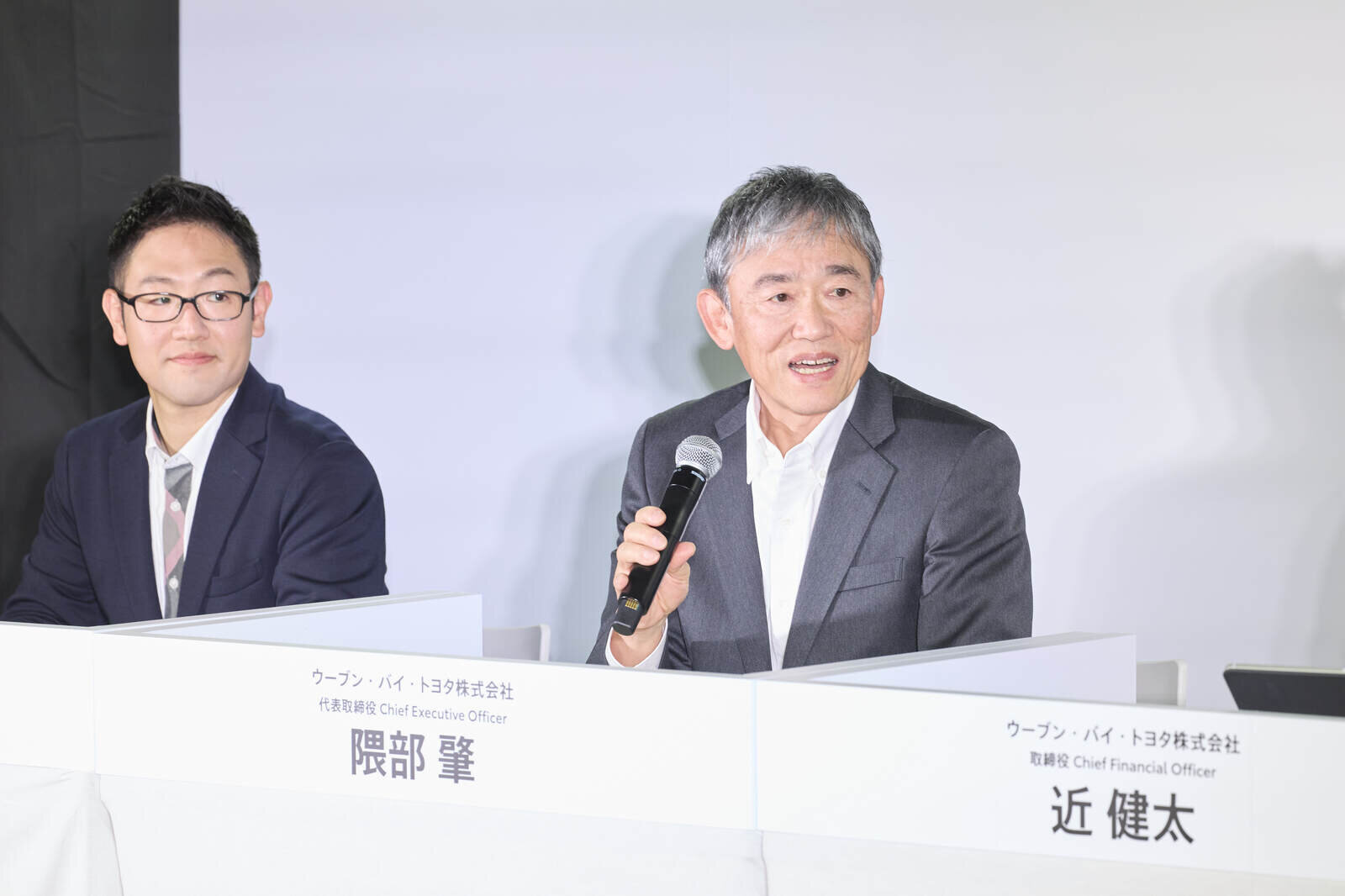
I think tugboat is a perfect description of our mission. As you all know, tugboats are used to change the course of large ships. Such large vessels cannot easily do that on their own.
Our mission is to pull the bow to change the ship’s bearing, even just a little. Maintaining a suitable distance outside Toyota, we can see new worlds and make suggestions: “How about this way, or that way?”
As for whether it is a complete reset or a partial one, there are various circumstances at play, but in either case, I think our purpose is to lead from the front.
CFO Kon also commented on the “tugboat” relationship between WbyT and Toyota.
CFO Kon
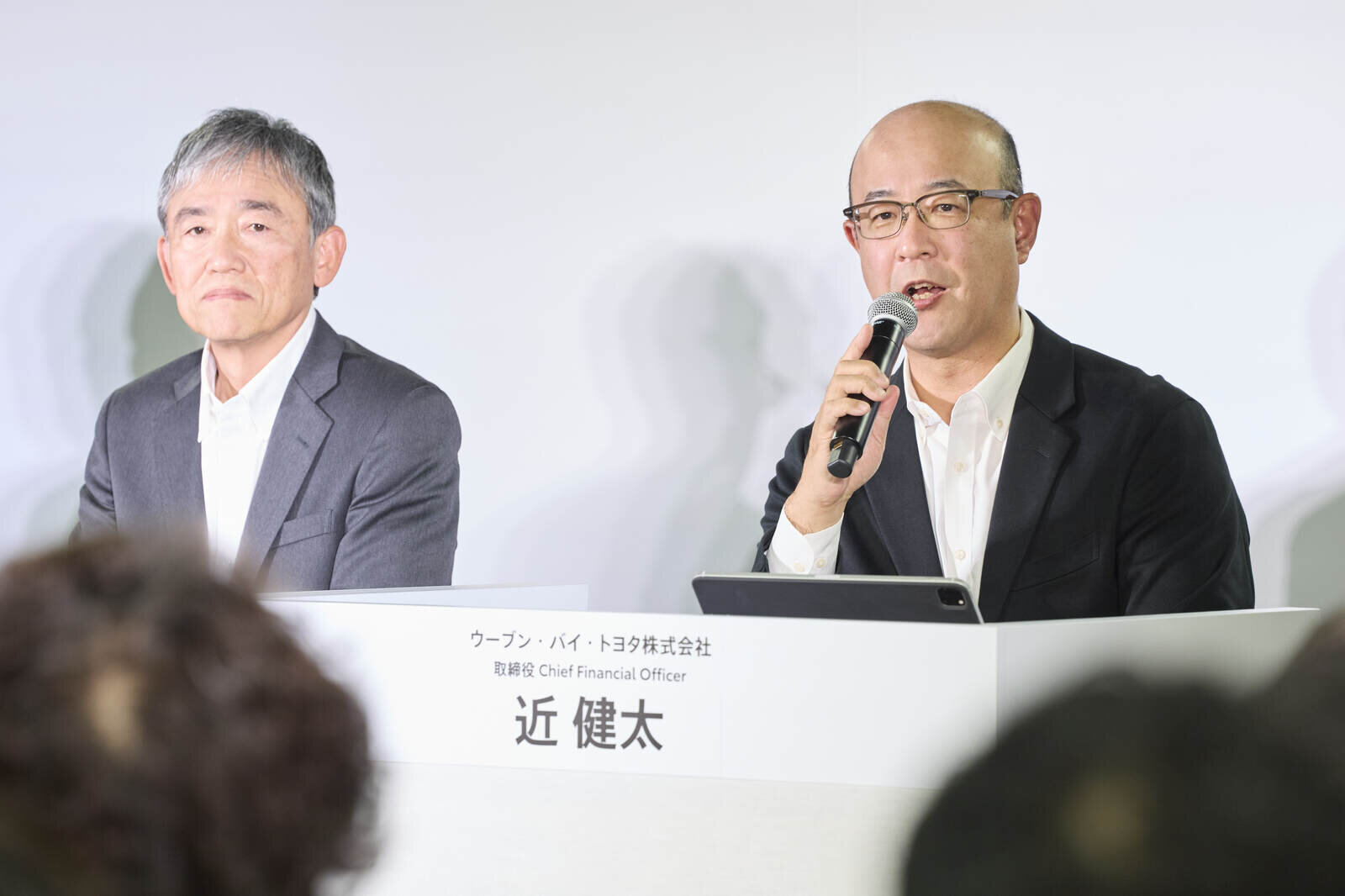
The personnel who have come over from Toyota must serve as the “hooks” that connect our tugboat to the big ship, Toyota.
I myself spent a long time at Toyota before coming to Woven. The biggest thing I notice in WbyT’s culture is how good the younger members are at sharing information in their work.
Unless everyone has access to the same information, we cannot hope to proceed in an agile way. This kind of company culture and way of working is very different.
That said, even with a tugboat the big ship itself still needs to move, so our role is to ensure those hooks are firmly in place.
To return to the question of a complete reset, I think the key is to reset some areas while having our tugboat lead the way forward in others.
On our January 25 episode of Voice-Only Toyota Times News, Chairman Toyoda similarly said that Woven City was to serve “as something of a spearhead,” with a mission “to lead the transformation of Toyota and the auto industry.”
This project is unlike anything the world has ever seen. All eyes are on Woven City and WbyT as they begin weaving the future.