





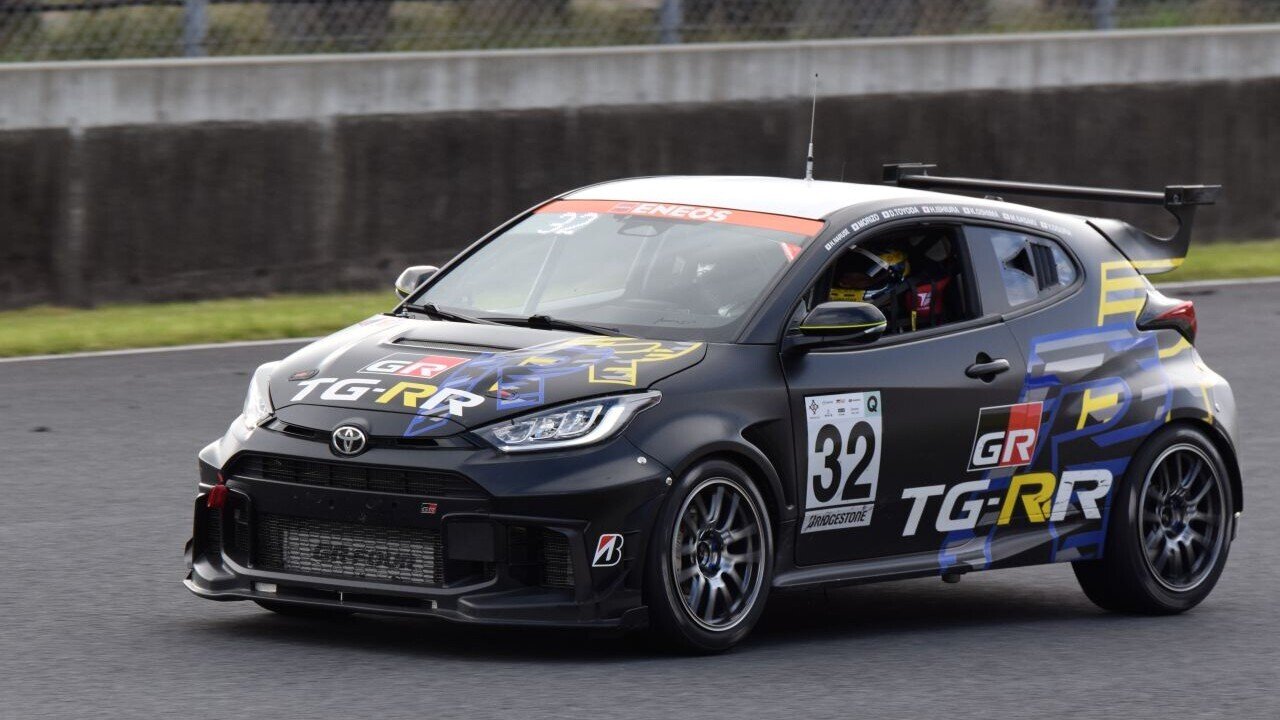
After completing the Nürburgring 24 Hours in June, the GR Yaris returned home for Round 5 of Super Taikyu. The race also provided an update on the midship model that was originally slated to compete.
Round 5 of the ENEOS Super Taikyu Series 2025 Empowered by BRIDGESTONE was held at Autopolis in Oita Prefecture on July 26-27.
For this race, TOYOTA GAZOO ROOKIE Racing (TG-RR) planned to field the GR Yaris M concept, a version of the GR Yaris with a midship layout.
Unveiled at Tokyo Auto Salon in January, the concept moves the engine from its conventional front position to near the center of the car, enhancing handling.
This midship model had targeted a debut at Autopolis, but with development not completed in time, the entry was postponed.
In place of the midship model, however, another car captured the fans’ attention: a GR Yaris DAT built to the same specification as the vehicle that completed the Nürburgring 24 Hours, held in Germany in June.

Honed in Super Taikyu and toughened on what’s often called the world’s most demanding course, this Nürburgring-spec GR Yaris was racing in Japan for the first time.
From Nürburgring to Super Taikyu
However, this race in Japan was about more than merely showcasing the GR Yaris DAT.
A key objective was to capture data on how a car built to survive the Nürburgring performs on Japanese circuits—and channel those learnings into future production development.
This race was about addressing the differences between the German circuit and those at home.
The Nürburgring is a 25-kilometer course with an elevation difference of around 300 meters, including numerous undulations where cars briefly go airborne.
By contrast, circuits in Japan measure around 4 kilometers per lap with flatter surfaces and less elevation change. What many of these courses do have, however, is succession of tight, high-G corners.
GAZOO Racing Company President Tomoya Takahashi describes the two courses as being “as different as gravel and asphalt.”
“If the road is different, you have to rethink your entire approach to the car,” he added, explaining the importance of retesting the GR Yaris DAT on Japanese circuits.
President Takahashi

The GR Yaris may be just one car, yet our customers enjoy it on many different roads.
Therefore, just as shoes for running on rugged trails are made differently from those for asphalt, I believe our role is to expand the range of driving conditions handled by the GR Yaris.
We aim to build an environment where customers can choose what best suits where they drive—whether it’s parts and tuning for tracks like the Nürburgring or settings optimized for Japan’s domestic circuits.
To create those options, we want to see how a Nürburgring-spec car responds on a Japanese circuit, under the extreme conditions of racing.
Super Taikyu shows capabilities and challenges
Under a blazing midsummer sun, teams competed in a five-hour endurance race.

While the heat caused problems for some vehicles, the #32 Nürburgring-spec GR Yaris had a smooth run, completing the race without major trouble.
Although the car was entered in the ST-Q class, where outright ranking is not the focus, the team was right in the mix throughout the race, managing to finish in the top half.

The response from drivers was also positive, noting that the car was “easy to drive” and “a good fit for domestic circuits as well.” GAZOO Racing Company Assistant Manager Kei Hisadomi, who helped develop this GR Yaris, looked rather relieved.
Assistant Manager Hisadomi
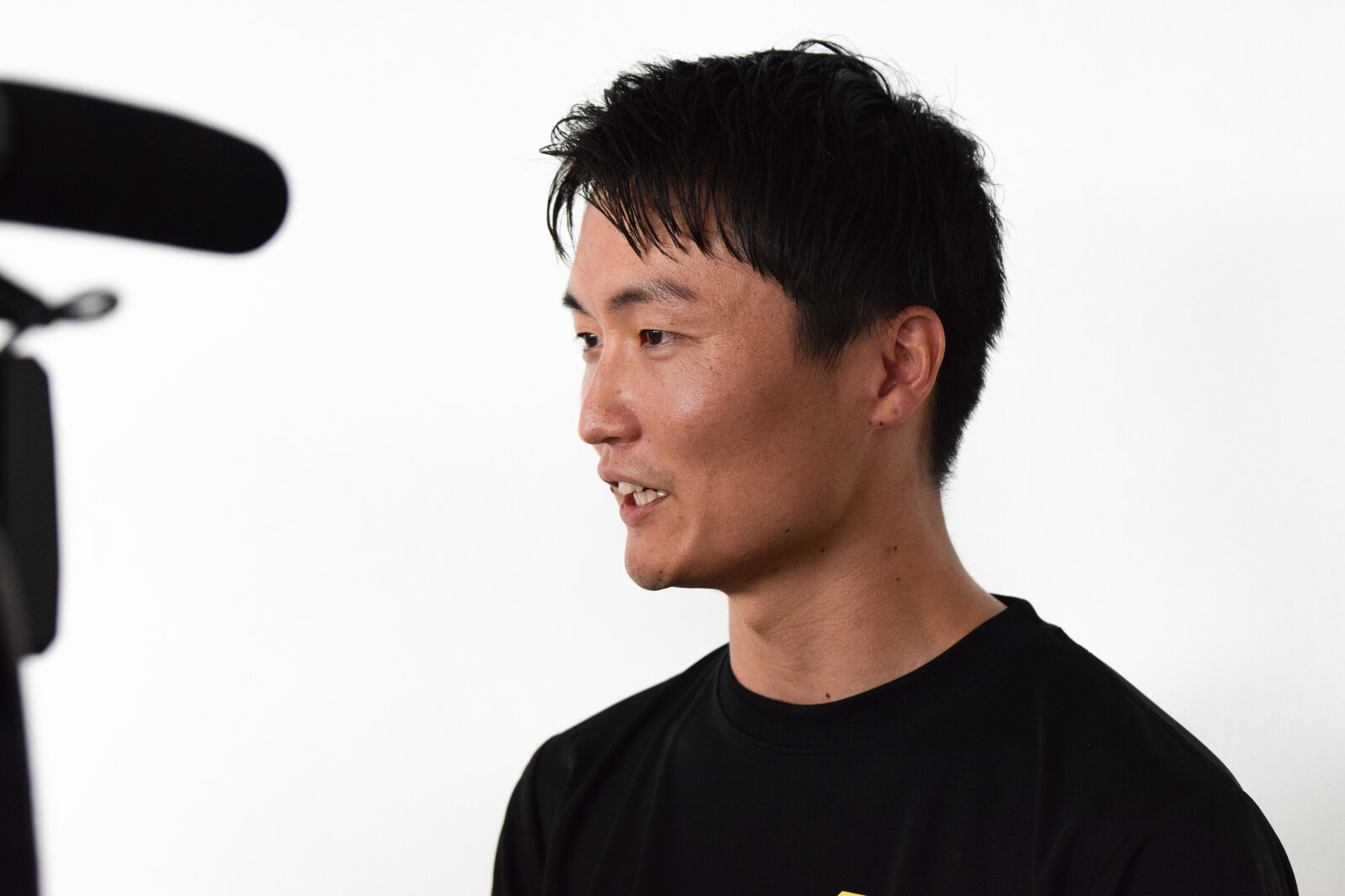
Above all, I was extremely pleased and relieved to see that the car ran so well and handled a Japanese circuit without any trouble.
We developed this car with the Nürburgring in mind, but because it was forged on those truly grueling roads, I believe the result is a vehicle that’s safe and easy to drive on any racetrack, anywhere in the world.
Competing in the Super Taikyu race also revealed some challenges unique to Japanese circuits.
Assistant Manager Hisadomi
The way many of the parts wore out differed from Nürburgring.
For example, tire damage was greater than we expected.
Going into the race, we knew that the car would spend a long time under lateral G-forces during turns, but the level was such that we worried whether the tires would hold up.

Alongside such tire management aspects, this race gave us a chance to learn the dynamics and differences that are unique to Japanese circuits. I feel we still have a lot to learn.
We want to use the data and insights gained from Nürburgring and this race to develop the GR Yaris and other GAZOO Racing vehicles with greater precision.