



Part of our Japan Mobility Show 2025 coverage, this three-part series outlines the vision behind exhibits by four Toyota brands. In this second article, CBO Simon Humphries talks Lexus innovation.
Inimitable exhibits by Lexus
<LS Concept>

During our livestream on October 13, this six-wheeled vehicle was unveiled alongside the new Lexus commercial.
When asked about the development background, the LS Concept’s chief engineer explained that the aim was to provide maximum interior space and unprecedented comfort. Seeking to ensure that passengers could move in and out elegantly, the team landed on a six-wheel design.
At the press day, our very own Kyonosuke Morita was able to step inside, providing a firsthand account of the meticulously crafted interior.
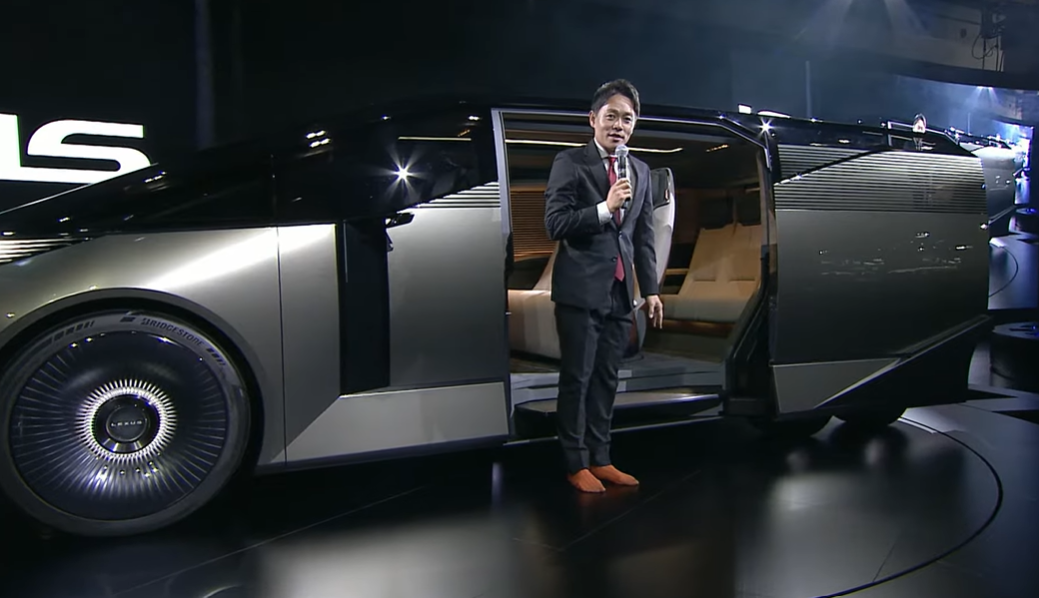
Unlike many three-row vehicles, the LS Concept doesn’t require the second row of seats to be folded down for entry. The spacious third row allows passengers to move in and out comfortably.
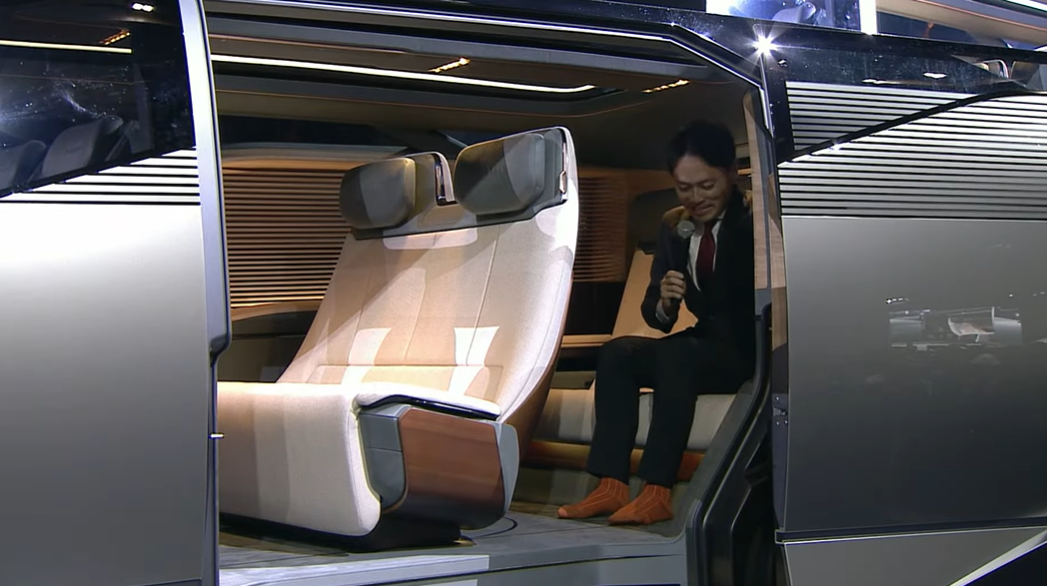
What’s more, the second-row seats can rotate 180 degrees, creating an ideal space for in-car meetings.
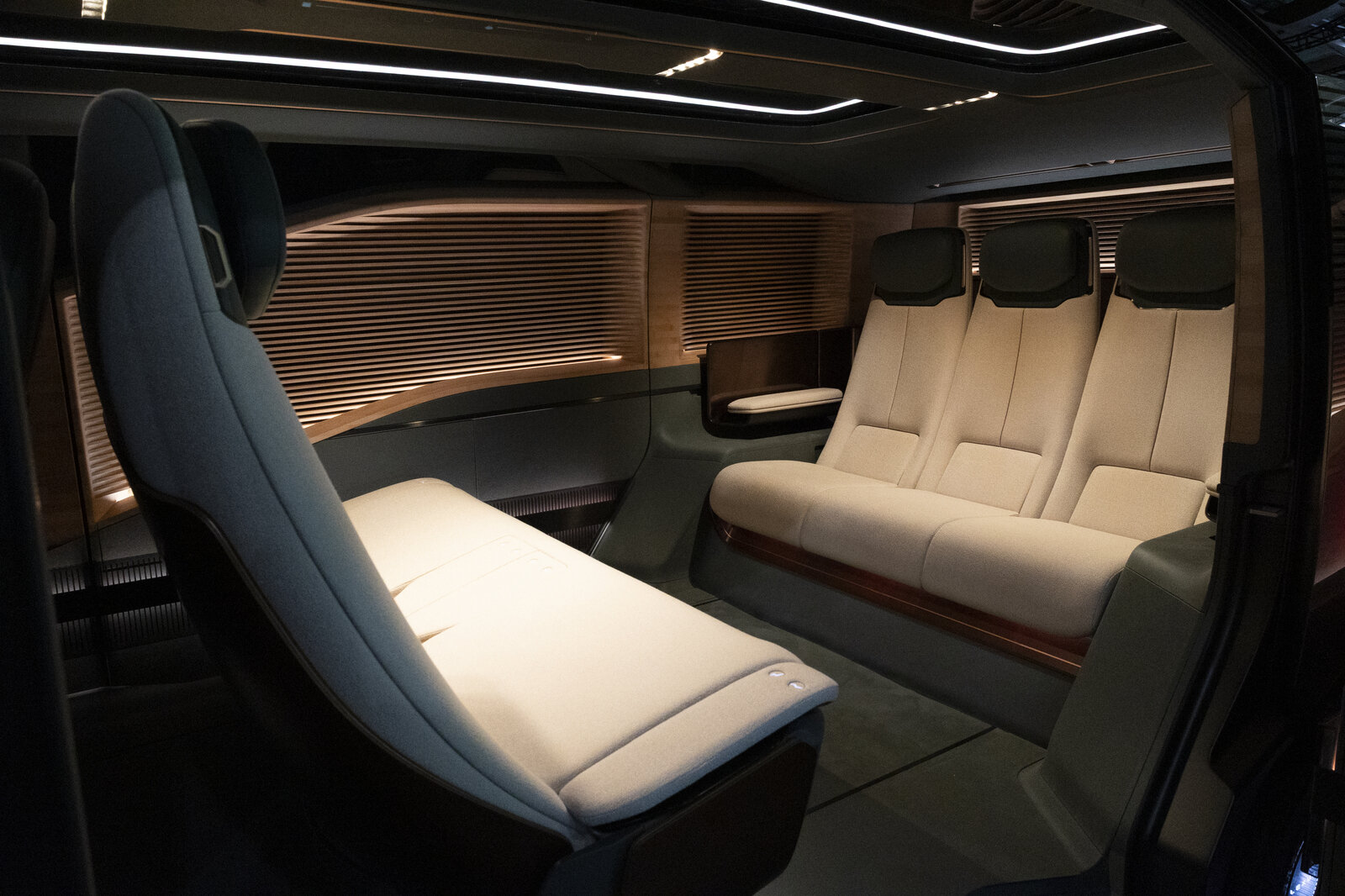
With a sunroof offering sky views, “It really feels like a luxury space,” commented Morita on board the LS Concept. For more details, watch the full presentation here.
For some reason, Morita took off his shoes before climbing into the vehicle. As it turns out, the color of his socks hinted at the special car that was to follow the Lexus speech. Make sure to check out the video, as well as our next article in this series.
Finally, we asked the LS Concept’s chief engineer about his outlook. “This isn’t just a concept model,” he replied. “We are serious about working toward a commercial release.”
〈LS Micro Concept〉

Dreamed up as a companion to the LS Concept is the single-seater Micro Concept.
It is envisioned as a fully autonomous luxury vehicle for navigating narrow streets, covering the last mile after a trip in the LS Concept.
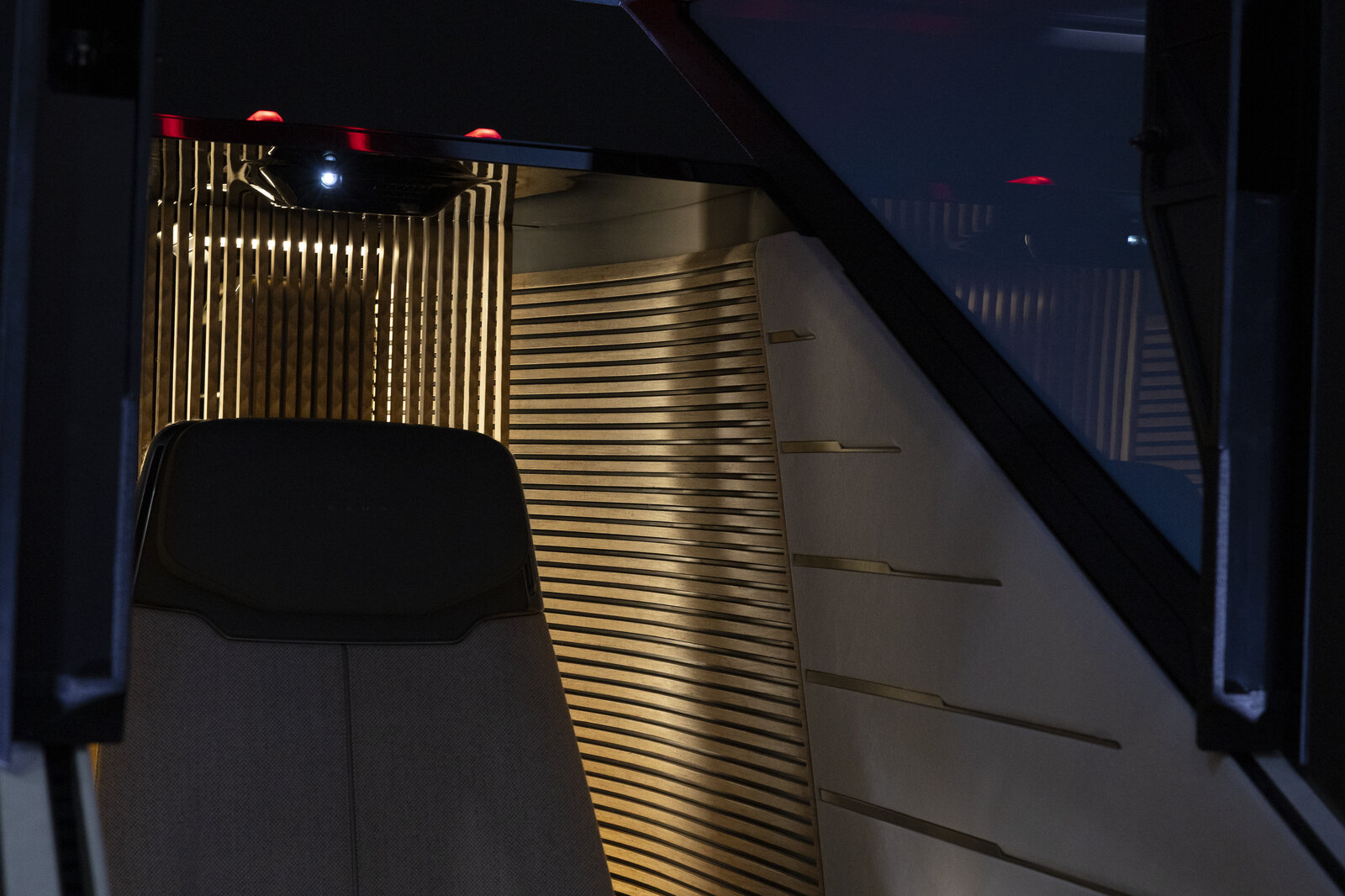
The interior is designed to wrap passengers in a “bespoke cocoon.”
To ensure a comfortable onboard experience, the interior can be tailor-made to order.
Together with the LS Concept, Lexus is also exploring enhanced functions that would enable seamless access for users with impaired mobility.
〈LS Coupe Concept〉
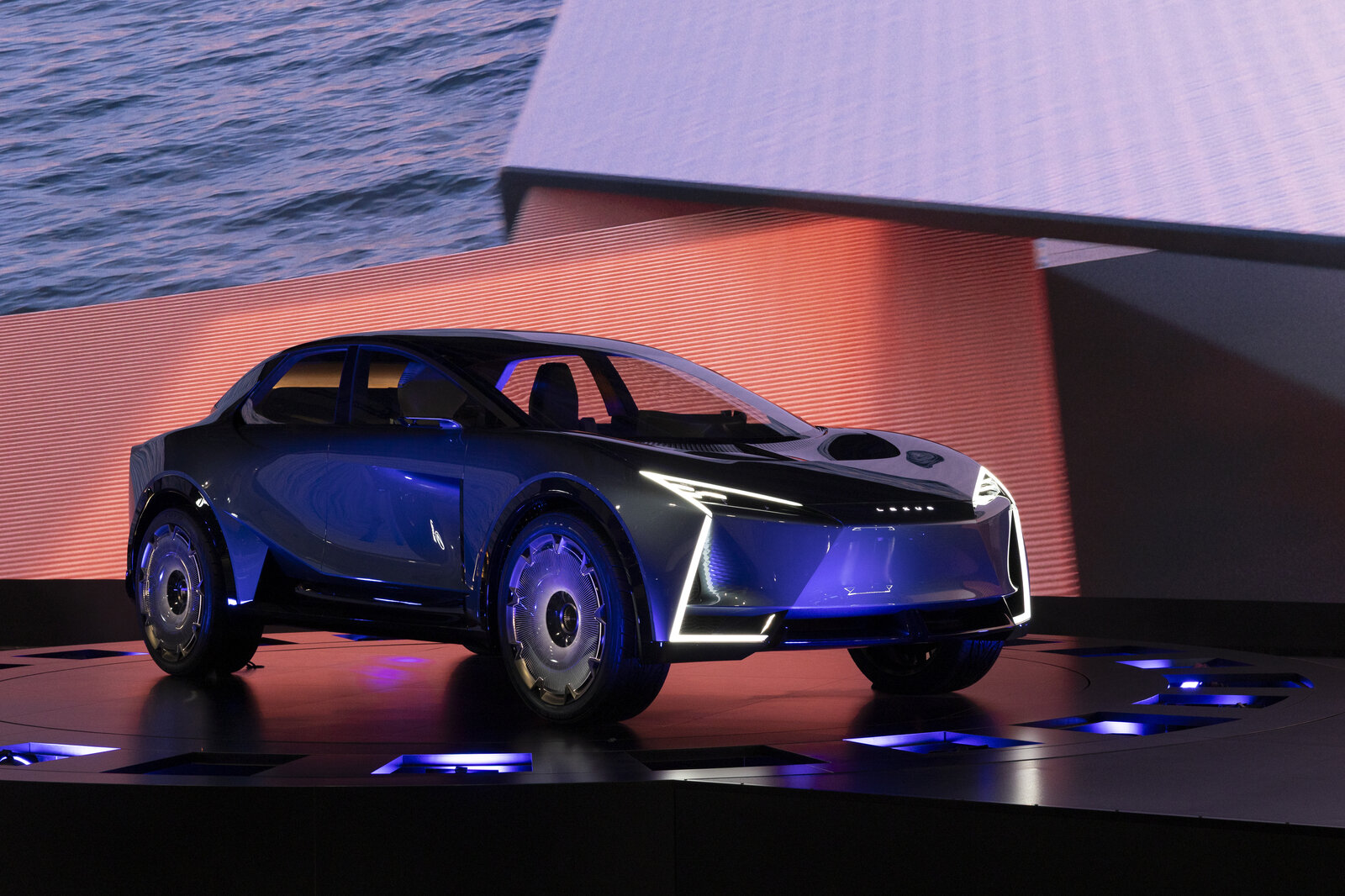
This is a car built to be as fun for rear-seat passengers as it is for the driver behind the wheel.
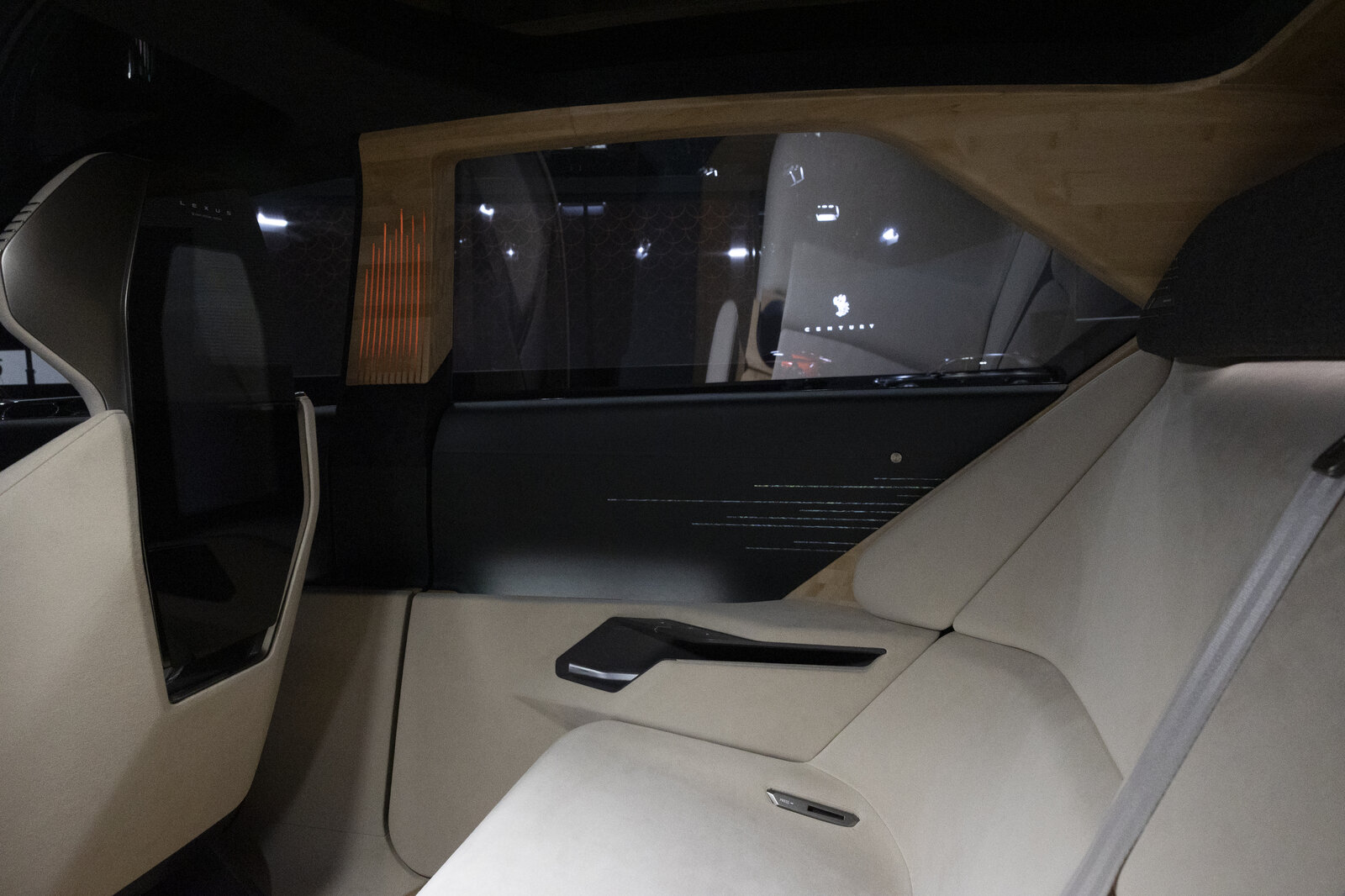
The rear seats face built-in monitors, intended for enjoying the surrounding scenery via a front-view camera, seeing the faces of those in the front seats as you chat or using the map to assist in picking the next destination.
〈Lexus Sport Concept〉

The Sport Concept was created as a driver’s car, catering to the emotional side of driving.
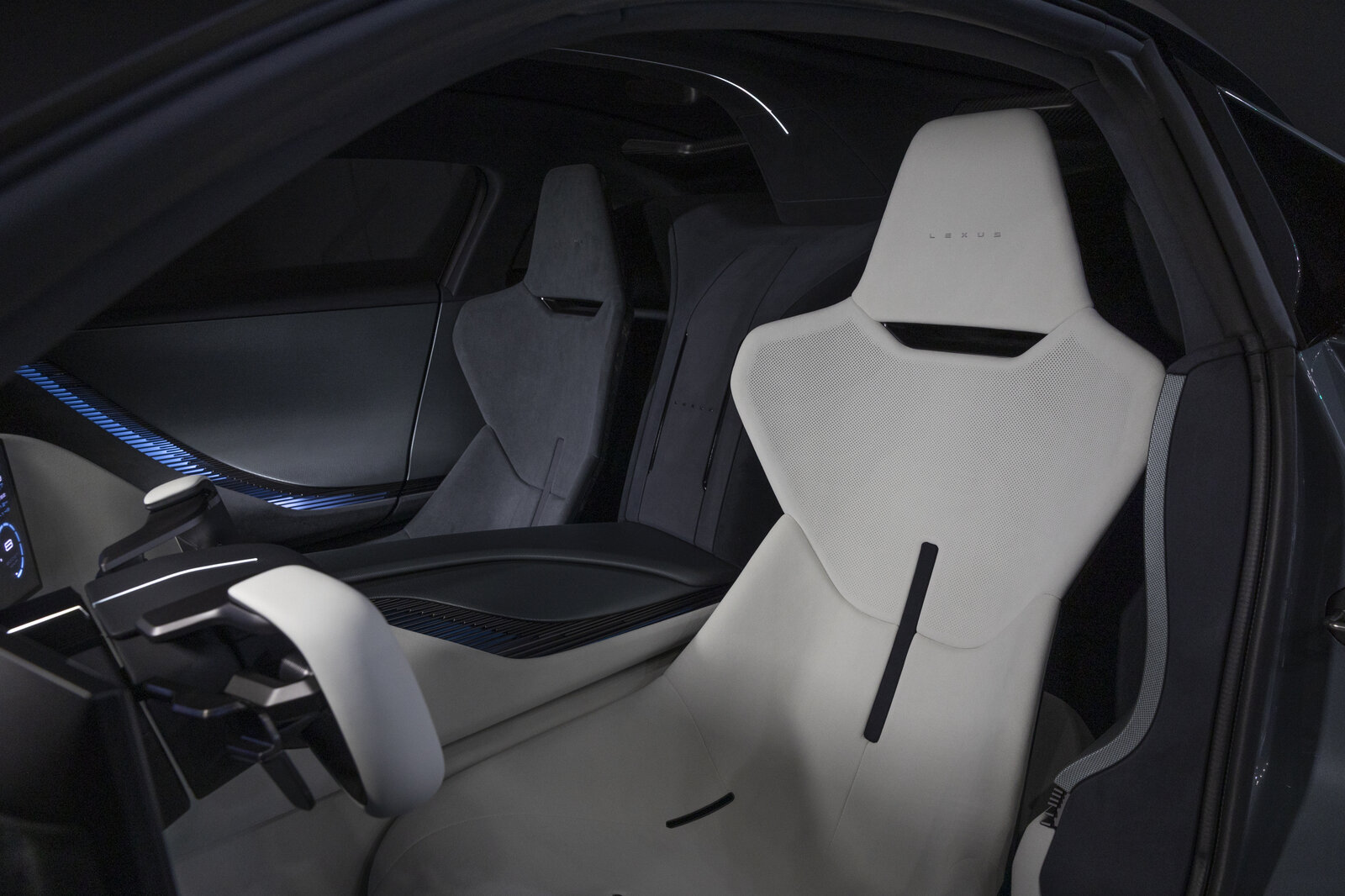
It features different materials and designs for the driver and passenger seats.
The driver’s side is shaped to securely envelop the body, allowing for complete immersion in the driving experience. Meanwhile, the passenger seat is designed for a comfortable and relaxing ride.
〈360 degrees of mobility〉
Air and sea mobility was also on show.
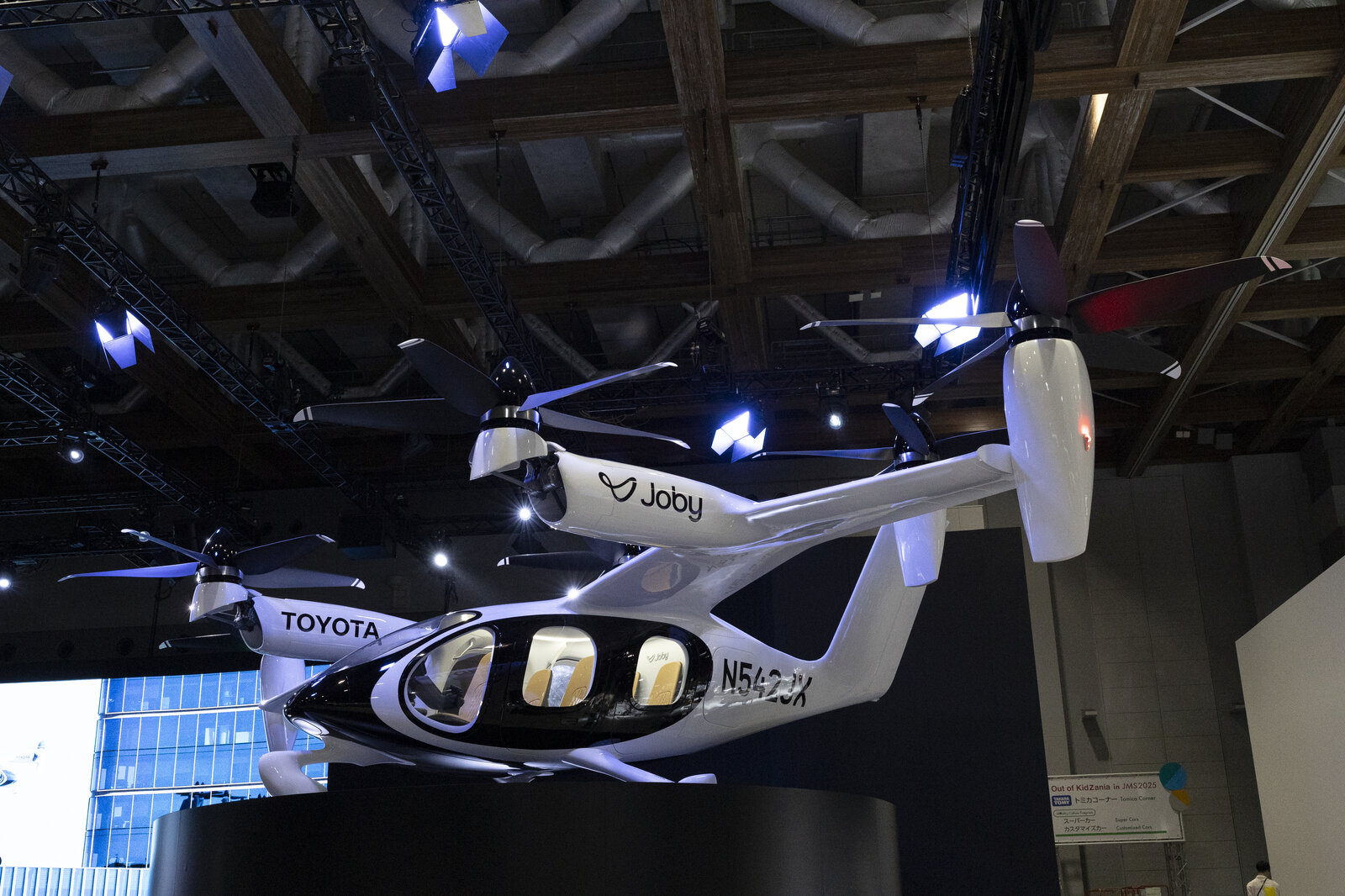
Toyota has partnered with Joby Aviation to develop eVTOL* “flying cars.”
*Electric Vertical Take-Off and Landing. Combining aspects of helicopters, drones, and small airplanes, eVTOLs are expected to serve as “flying taxis” for commuting, business trips, or leisure travel. They are exceptionally quiet, safe, and environmentally friendly (zero emissions).
To eventually bring these flying cars into the mainstream, the first step is to make this form of mobility readily accessible to luxury consumers.
With Lexus pursuing 360-degree mobility across land, sea, and air, the brand’s booth at JMS features a mockup of the latest model.
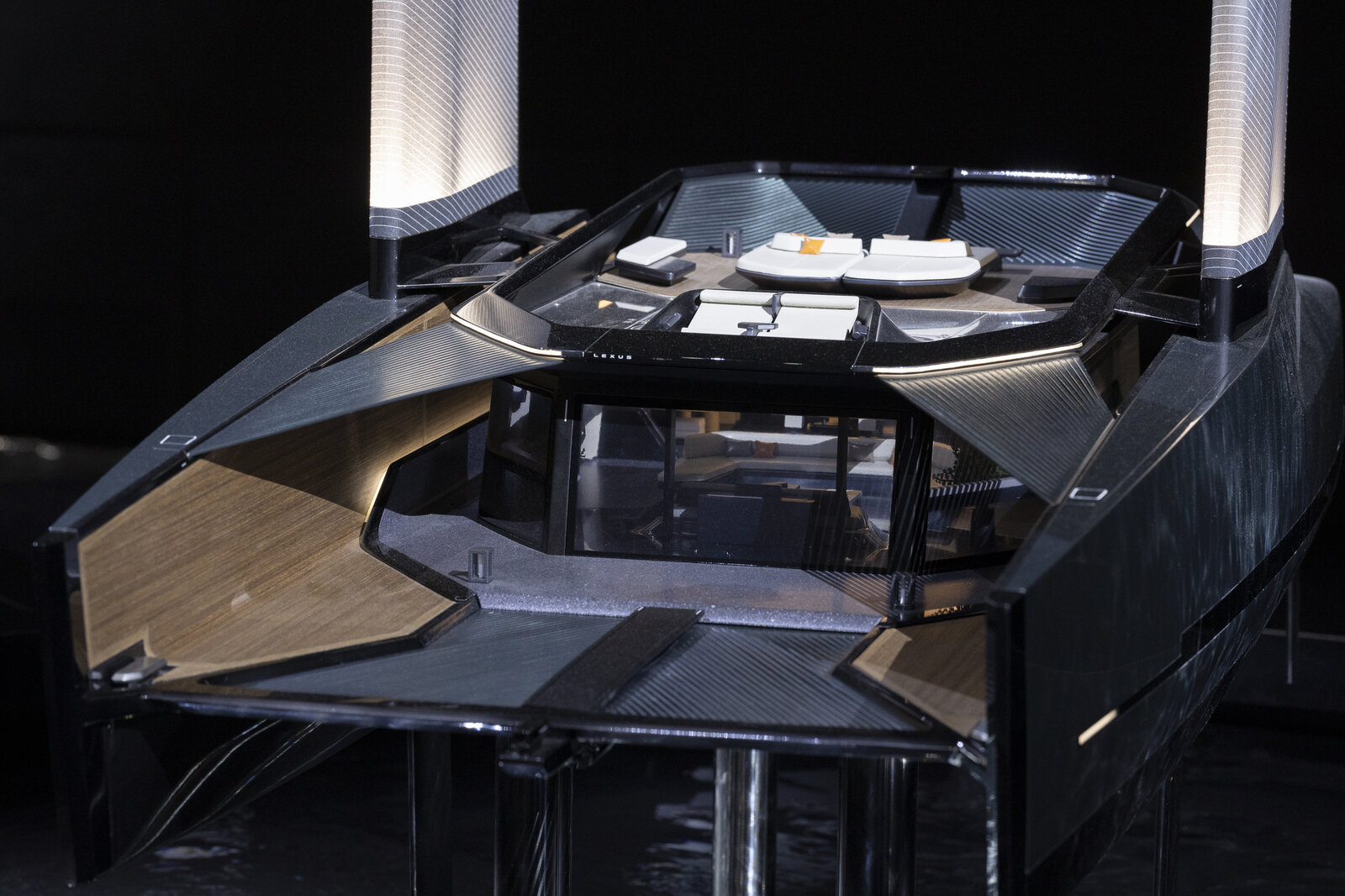
As for new marine mobility, the company has put forth the Lexus Catamaran*, a miniature model of which is on display at the venue.
*A watercraft with two parallel hulls connected by a deck.
Development can be traced back to 2019 and the launch of the LY650, the brand’s first luxury yacht.
For Lexus to continue creating marine mobility, the brand must make its offerings more appealing to the luxury segment. To achieve this, the company has set out to deliver superior comfort and lower environmental impact.
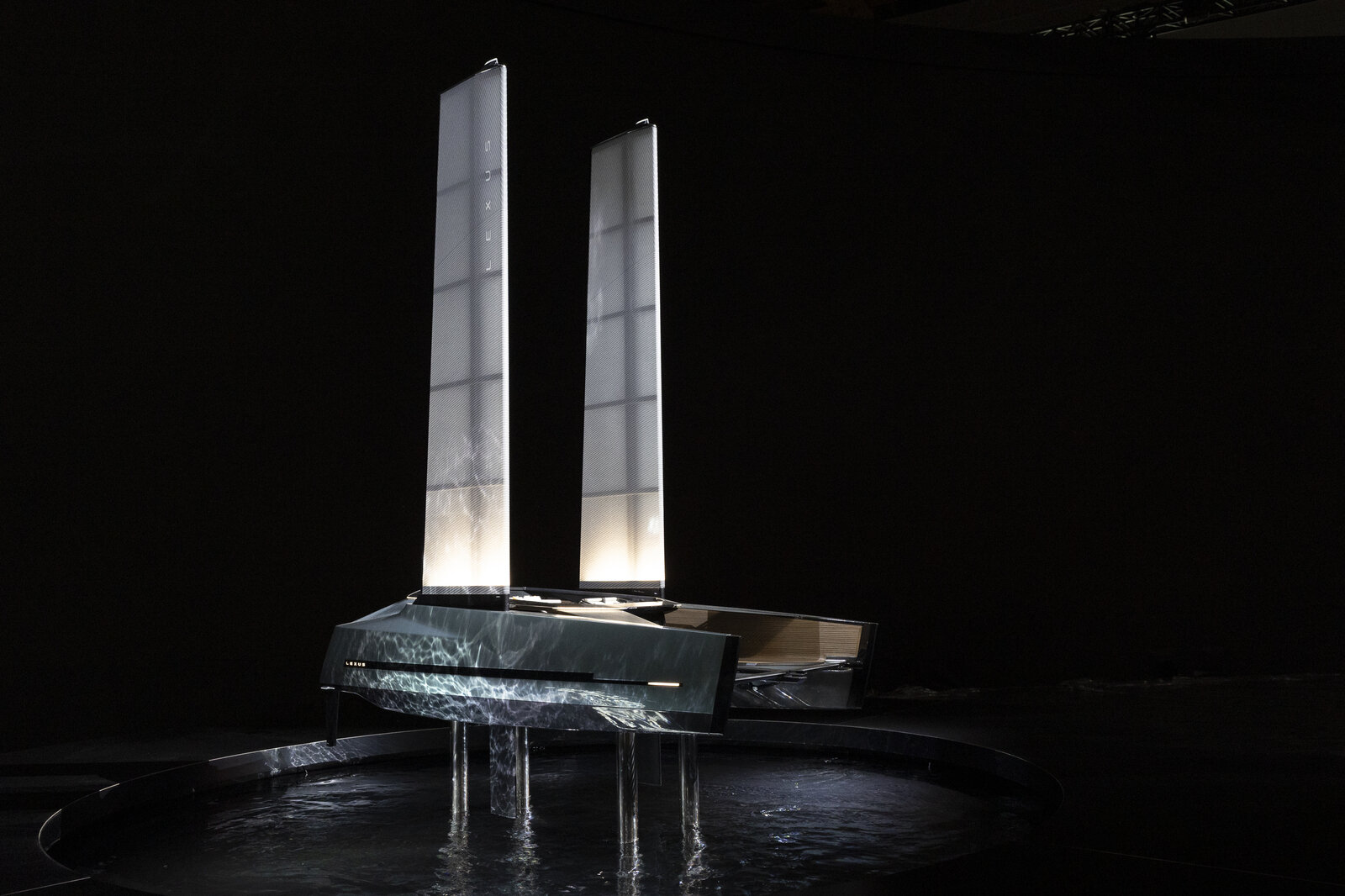
The catamaran’s twin vertical sails are equipped with solar panels.
In addition to using clean energy, the craft also borrows self-driving technologies from cars, powering autonomous seafaring that enables long journeys without requiring a crew.
This innovation enables users to sail the sea independently, offering the ultimate in privacy and fulfilling the catamaran’s concept of “true escapism.”
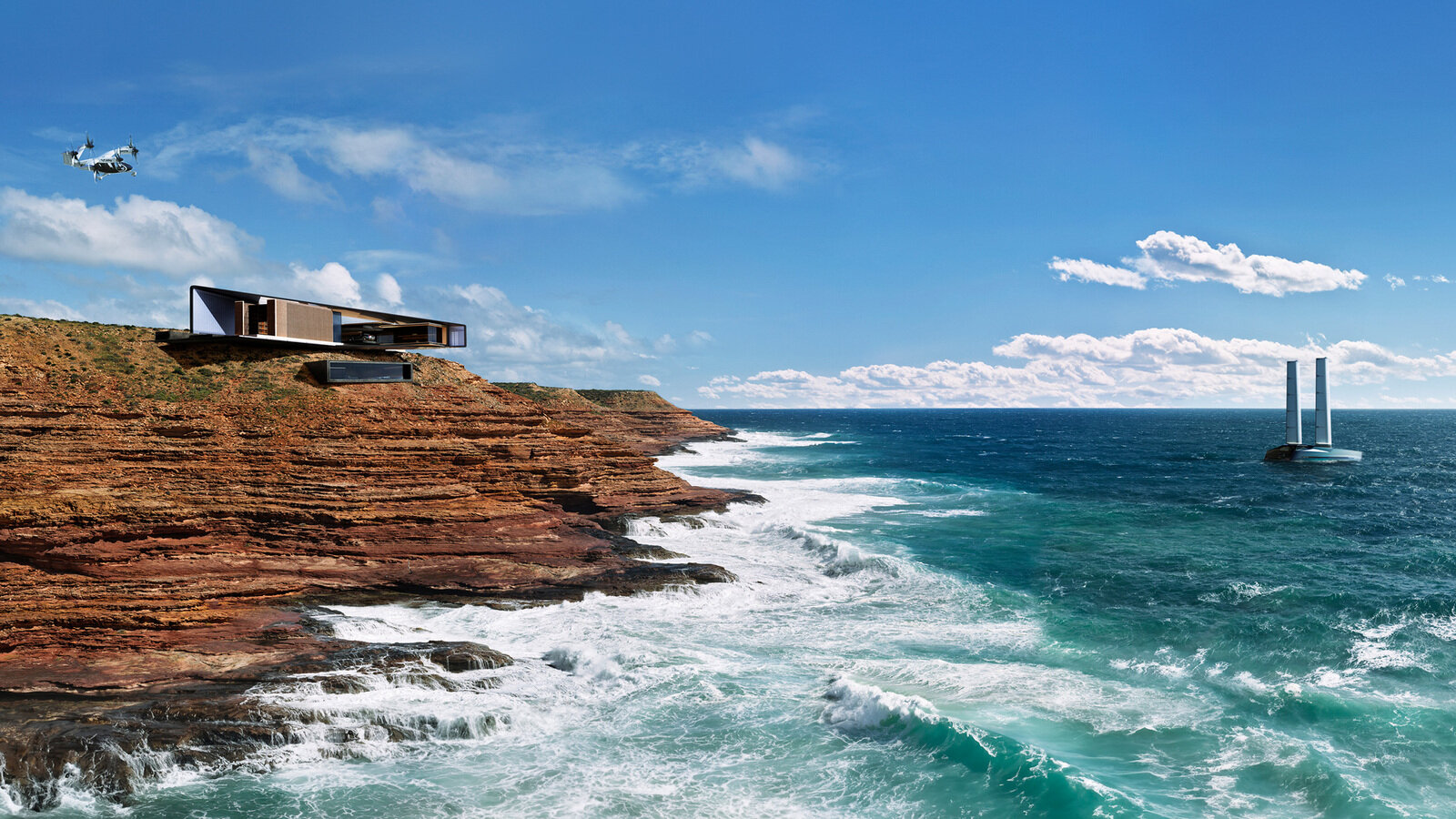
With 360 degrees of mobility moving from land to sea and air, Lexus seeks to fundamentally transform the way we live.
Next up: Century
Lexus’s unique lineup of vehicles at the Japan Mobility Show shows the brand’s commitment to innovation and a luxurious future.
JMS 2025 is open to the public from October 31 until November 9. These vehicles can be found at the Lexus booth on the first floor of Tokyo Big Sight’s South Exhibition Hall. In the words of CBO Humphries, visitors will no doubt “discover something new.”
And in our next article, we showcase the Century, which drew the biggest reaction during the October 13 livestream.
In his speech, Chairman Toyoda talks about the pinnacle of the Toyota brands, a car in a class of its own. Don’t miss it.