




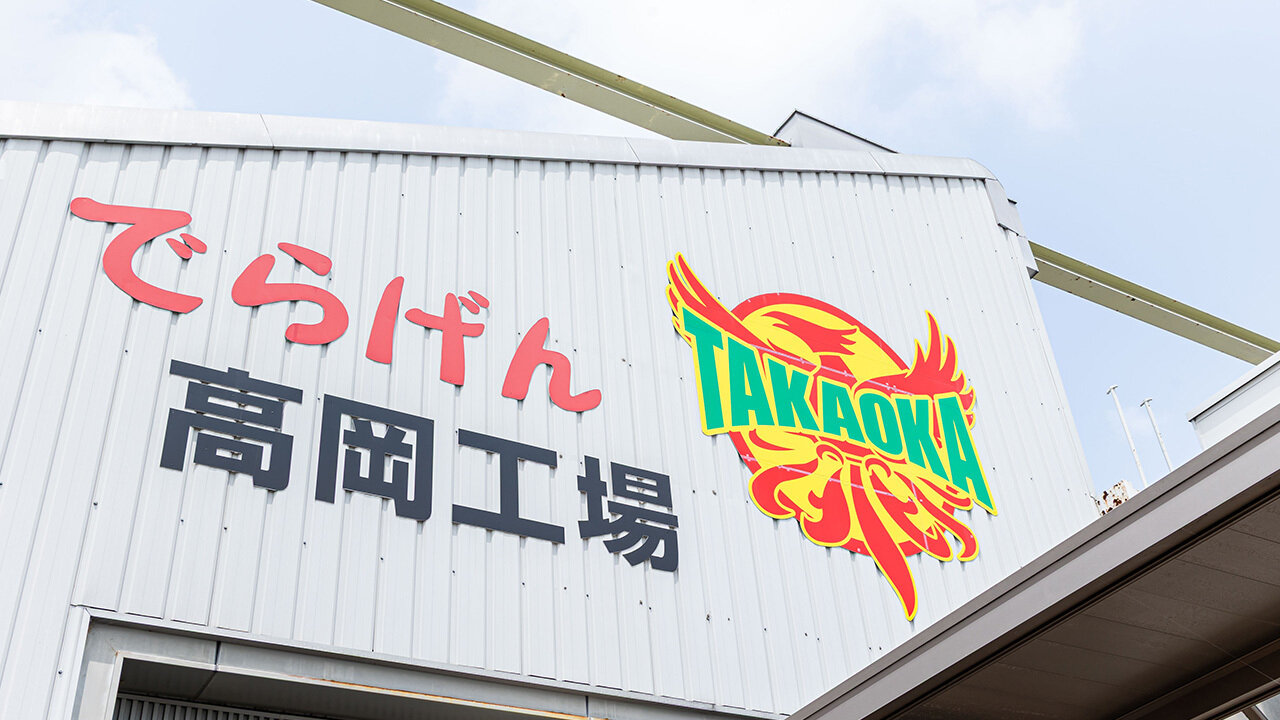
The Takaoka Plant is home to Toyota's first dedicated BEV production line in Japan. What efforts are being made at the genba to create a working environment welcoming to all?
In August, Toyota set up its first dedicated battery electric vehicle (BEV) production line in Japan.
Since its founding, the Takaoka Plant has produced cars for the mass market, including much-loved models such as the Corolla, Prius, RAV4, and Harrier.

Of the plant’s two assembly lines, Line 1 has been converted specifically for BEVs, with its Corolla production passed over to the Tsutsumi Plant and Toyota Motor East Japan.
Note: Line 2 continues to produce the RAV4, Harrier, and other models.
Currently, the line produces only the new bZ4X, announced in October, but the plant expects to handle more diverse models as Toyota’s BEV offerings grow.
Takaoka has become a key facility underpinning Toyota’s electrification efforts, but recent changes go beyond the production lineup. The plant is also transforming the way employees work.
We examined the genba initiatives designed to help all workers thrive, regardless of age, gender, nationality, or physical ability.
Transforming work through digitalization
Alongside the dedicated BEV line, Toyota has also set up a new Battery Factory.
The facility makes battery packs, but since much of the information is sensitive the interior is normally not shown to the public. For this article, we were given a special tour of the monitoring room.

Inside, the room was lined with large monitors displaying information that gave an overview of the factory’s operations, including the power being used to run equipment, compressed air usage, and employees’ overtime hours.
Thanks to these improvements, the task of checking operating status, which previously required visits to the production floor, can now be done remotely.
With the necessary information now available anytime, anywhere, time spent on inspections has been drastically reduced. What’s more, irregularities can now be detected in real time.
The team behind these digitalization efforts brings together not only personnel with IT expertise, but also many with experience maintaining and operating equipment for various production processes, including body manufacturing, painting, and assembly.

One member of the team is Battery Factory Group Assistant Manager Yohei Hishinuma, who explained that digitalization is about transforming the way people work.
Assistant Manager Hishinuma, Battery Factory Group, Body Manufacturing Div.

Digital transformation does not simply mean upgrading equipment and making data visible. Only by changing how people work can we say that the transformation has been a success.
Here at the Battery Factory, what we most wanted to achieve was real-time sharing of information, and IoT (Internet of Things) integration. Being able to access the necessary information when it is needed allows us to transform how many jobs are performed.
For example, the process known as electrodeposition, which is used for battery pack cases, involves placing them in a drying furnace set at around 150 to 190 degrees. Monitoring operations around such equipment means working in a high-temperature environment.
With digital visualization, staff no longer even need to go near the drying furnaces. Changing the nature of the work reduces the physical toll and frees up time that can be devoted to improving other aspects.
On top of this, we have over 300 sensors installed in the electrodeposition process, providing us with real-time information. By analyzing this vast data with AI, we can help to optimize equipment management, boost quality, and continue improving operations.
As we pursue these digital innovations, we are excitedly envisioning future ways of working that until now were unimaginable. It helps to know that we can always rely on colleagues who have extensive knowledge of the genba.
Breaking down language barriers to boost safety
Efforts to improve work practices via digital tools are also underway on Line 2.
Part of the Body Manufacturing Division, Body Welding No.2 Section currently employs many staff from outside Japan. They speak more than half a dozen different languages, including English, Chinese, Hindi, and Burmese.
Before work begins, group leaders bring their team together for a meeting to share key instructions, but the language barrier has presented an obstacle.
Since many of the foreign-born employees are unable to understand explanations in Japanese, group leaders previously had to convey directions individually using smartphone translation features or apps.
The result was more time spent communicating information. Group leaders were also concerned that important injury prevention precautions may not be getting across.
To resolve this problem, the plant introduced translation software, displayed on large monitors in each genba section. With this arrangement, the words spoken by group leaders are simultaneously translated, ensuring everyone present receives the same information.
Suzuka Akimoto, the Body Welding No.2 Section member responsible for bringing in the software, explained the features she prioritized.
Akimoto, Body Welding No.2 Section

Merely bringing the latest translation software into the genba is just adding another tool and does not truly solve the problem. The key is to look closely at the genba’s needs and provide what’s required, without going over the top or falling short.
As I saw it, the biggest problem on the Body Welding No.2 Section’s production line was the fact that there are multiple languages.
To overcome this, I customized the software so that it can simultaneously translate the group leader’s words into three or more languages. Doing so greatly reduced the time and effort required to retranslate information into each language.

Senior Expert (SX) Hiroyuki Shirasaki, who had experienced these communication difficulties firsthand, says the software has made things run more smoothly.
SX Shirasaki, Body Welding No.2 Section

Previously, I would translate on my smartphone as I talked, but doing away with that makes things a lot easier.
In recent years, we’ve also needed to communicate proper heatstroke precautions during the summer. Regardless of language or background, we want to create an environment where everyone work comfortably and with confidence.
